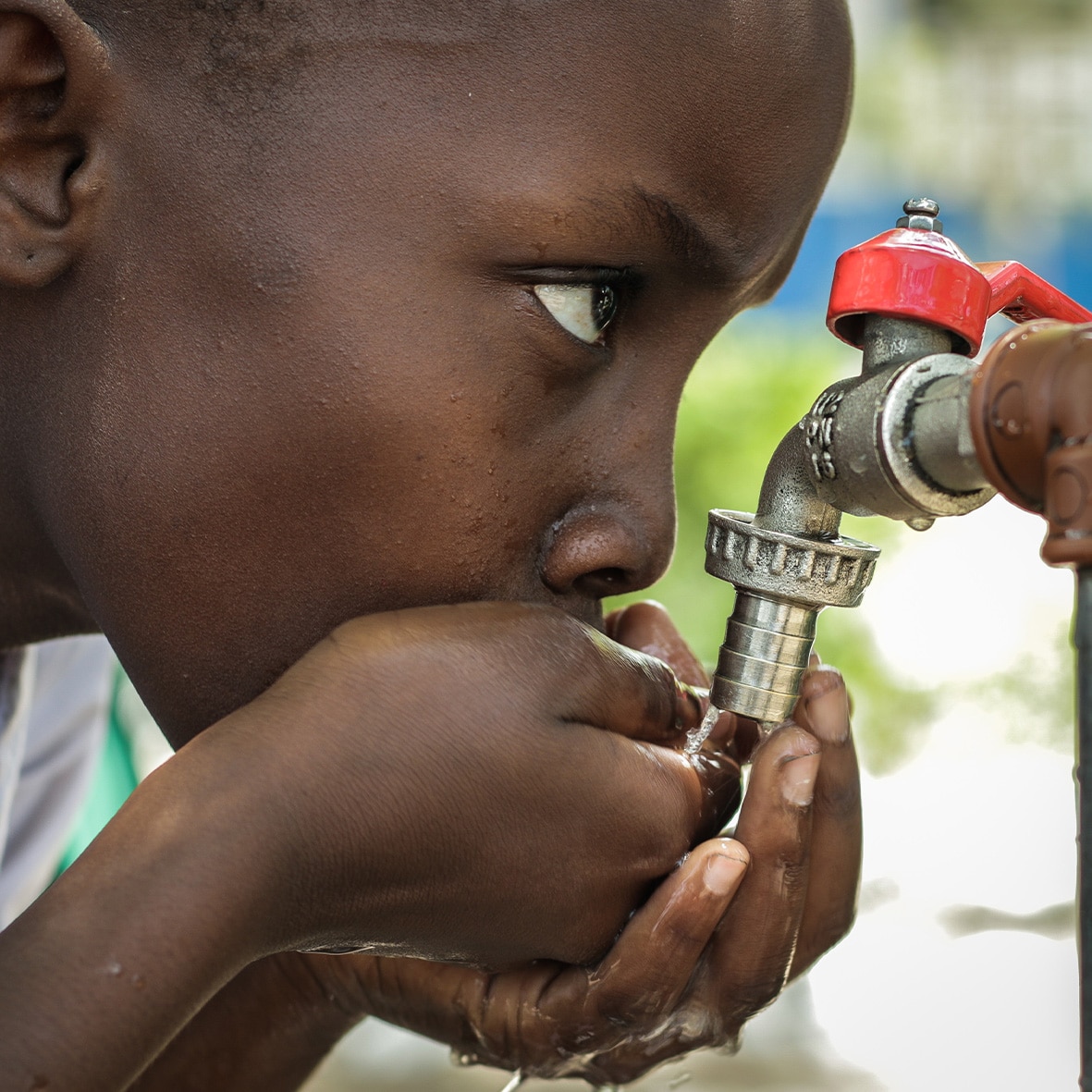
Every 400 pieces of Power a Life drinkware funds an Upgraded Family Well: a protected, family-owned clean water source for an off-grid rural homestead in Zimbabwe.
400
Items
1
Family Well
2.5L
Per item, per day
Without safe water close to home, children get sick, miss school, and spend hours every day carrying water instead of learning.
2.1bn
That's 1 in 4 people on the planet, including 106 million who still drink straight from rivers, lakes and ponds.[1]
1.4m
Safe water, sanitation and hygiene could prevent at least 1.4 million deaths each year, including around 395,000 children under five.[2]
200m
Mostly by women and girls. That's over 22,800 years of human time, lost every single day.[3]
69%
Diarrhoea is one of the top two infectious killers of children under five, and most of it is preventable with clean water and hygiene.[2]
$4.30
Water and sanitation pay for themselves many times over through better health and time saved.[4]
10-20
people served by a typical family well[8]
A protected source with a sealed headworks keeps out runoff and animal waste, cutting the risk of diarrhoea, cholera and typhoid.[2]
When water-fetching time is cut, girls' school attendance measurably rises, with the biggest gains in rural communities.[7]
Water in the backyard instead of kilometres away gives families back hours every day for work, childcare and school.[3]
Family wells typically support 60-70 litres per person per day across drinking, cooking, washing and bathing, far above emergency minimums.[11]
Water next to the home lets families grow vegetables, which means better diets for children and surplus to sell.[12]
It's a Zimbabwean innovation, it's tested at national scale, and it lets us reach more families, faster, and keep the water flowing for years.
Trained local well-builders dig and line the well by hand. No heavy drilling rig to book, transport or wait for, so families get water in weeks, not months.
Per person served, a family well cost around a sixth as much as a borehole in Zimbabwe's national programme.[8] The same budget reaches many more homesteads.
The family owns it, so the family looks after it. There are no pump parts to import and no waiting months for an outside repair team. Upkeep costs are low and handled at home.[8]
Developed by Zimbabwe's Blair Research Laboratory. By 2001 at least 45,000 wells had been upgraded, benefiting over 500,000 people, and it was found to be cheaper for government than any other method.[8][9]
Brick lining, a raised collar, a concrete apron with drainage, a lockable lid and a windlass keep dirty runoff, animals and contaminated buckets out of the water.[12]
Each well belongs to a real family you can put a name, a location and a face to, so your team can see the difference their gift made.
Zimbabwe's geography varies enormously. We match the technology to the rainfall, the rock and the water table, so every pound does the most good.
£300 - £600
Works best
Mashonaland and parts of Manicaland (Natural Regions II & III)
Higher rainfall keeps the water table within about 15m, so a hand-dug, brick-lined well reaches reliable water without machinery.
£1,900 - £3,800+
Works best
Matabeleland, Masvingo and lower Midlands (Natural Regions IV & V)
Drought-prone areas where shallow water disappears. Drilling 40-100m into deep aquifers, with a solar pump and tank, gives year-round water for a whole community.
£4,500 - £9,000+
Works best
Low-yield hard rock areas such as Chivi, Zvishavane and Buhera
A wide central shaft with horizontal bores that draw water from dry rock. Pump tests measured 16,500-30,000 L/day,[10] but these need specialist rigs and are usually built by government or NGO programmes.
£225 - £450
Works best
Eastern Highlands: Nyanga, Chimanimani, Honde Valley (Natural Region I)
Piping from a protected mountain spring down to homesteads. Zero power needed, but it only works where a perennial spring sits above the community.
Cost ranges are Power a Life in-country estimates (2026), converted at roughly £1 = $1.32, and include materials, labour and headworks. Actual costs vary by site depth and access.

400
pieces of drinkware
1
Upgraded Family Well
1,000L
per day, modelled conservatively
2.5L
clean water per item, per day
British Geological Survey pump tests on improved wells in Zimbabwe measured 7,500-14,700 litres a day.[10] In practice a family draws what it needs: around 60-70 litres per person per day for drinking, cooking, washing and gardening, across the 10-20 people a well usually serves.[8][11]
So we model each well at 1,000 litres a day. Divided across the 400 items that fund it, that's 2.5 litres of clean water per item, every day. Yields can dip late in the dry season (October-November), which is why we site wells carefully and don't overstate the figure.
Every 400 pieces of drinkware = 1 Upgraded Family Well
2,000+ units (in one order or across your orders)
Premium branded drinkware your people will use every day, and a family well in Zimbabwe for every 400 you order.
Ordering tech too? See how it funds solar lights