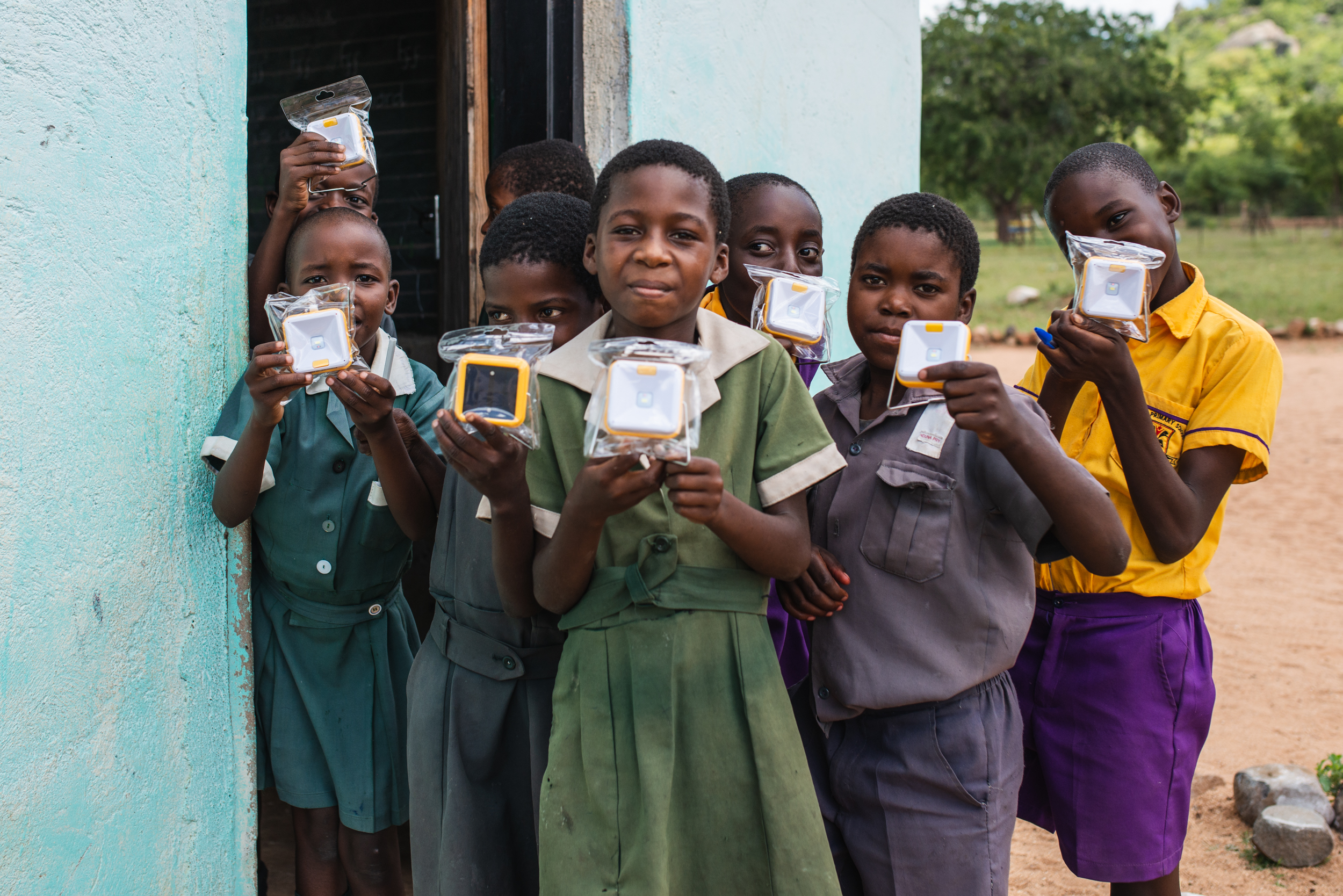
Every Power a Life tech product funds a solar light for a child in off-grid rural Zimbabwe: clean, free light to study by, to live by, and to walk safely by once the sun goes down.
1 = 1
Tech item, solar light
655m
People without power
+37pts
Grade 5 maths
In 2013, our founder Jeremie went completely off-grid to live with subsistence farming families in northern Senegal for a month. The aim was to understand these communities properly and build projects with them, not for them.
One thing stood out above everything else. When the sun went down, everything stopped. Children couldn't read or do homework. Parents cooked by firelight or the smoky glow of a kerosene lamp. Going outside meant stepping into total darkness.
Power a Life exists to change that, using the branded tech companies already buy. Your team gets a premium charger. A child gets light.
Read our full storyWithout electricity, families rely on candles, torches and kerosene lamps that are expensive, dim, smoky and dangerous. Or they simply sit in the dark.
655m
563 million of them, 86% of the global total, live in sub-Saharan Africa, up from 49% of the total in 2010.[1]
447m
The rural deficit in sub-Saharan Africa has grown from 376 million in 2010 to 447 million in 2024. Rural families are being left behind.[2]
1 in 3
Zimbabwe's national access rate is 62% (2024), but in rural areas it was just 31.6% in 2021, the latest rural figure available.[3]
#1
Often stored in old soft-drink bottles, kerosene is the leading cause of childhood poisonings, and household fuels for lighting and cooking cause a large share of severe burns.[4]
10-15%
For Africa's poorest families, fuel-based lighting is often the most expensive item in the household budget.[5]
270,000t
Simple kerosene wick lamps turn 7-9% of their fuel into soot. That's around 270,000 tonnes of climate-warming black carbon every year.[6]
+1 hour
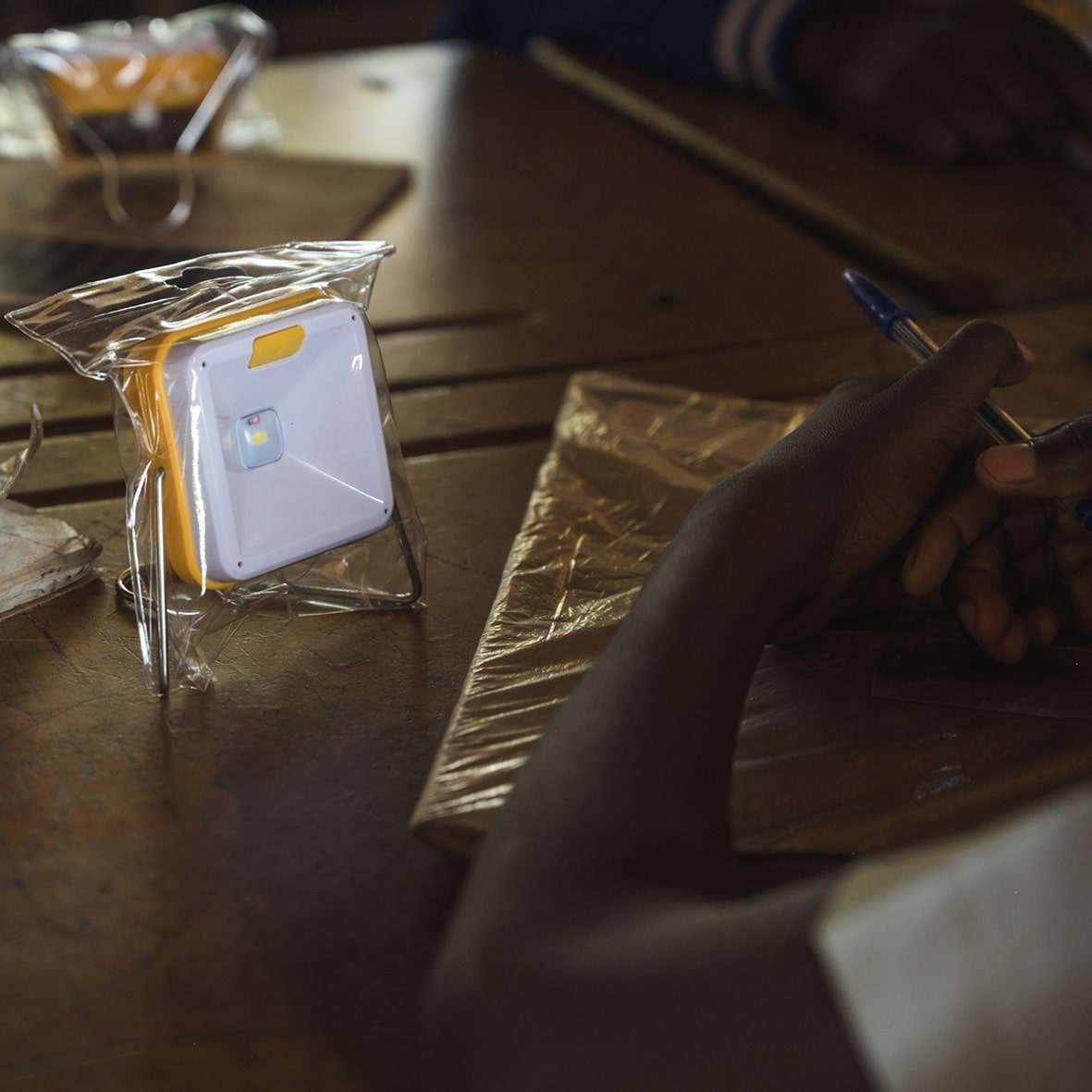
of homework a night with a solar light[7]
Solar lights are used mainly by children for homework. On average, children in households with one study for an extra hour every night.[7]
No open flame to knock over, and no bottle of kerosene for a toddler to find. That removes two of the biggest household dangers for young children.[4]
Families switching from kerosene to solar save around $70 a year, roughly 10% of their income, which is commonly spent on food, school fees and farming.[8]
Cooking, chores, reading and simply spending time together no longer have to squeeze into daylight hours.
In rural homesteads, the toilet, the water point and the path home are all outside. Without light, every trip after sunset is a step into the unknown. Our lights are portable, so they go with you.
Latrines sit away from the house. A light makes that walk far less frightening, especially for women and girls.
Rough paths, ditches, and snakes and scorpions active after dark are all easier to avoid when you can see where you're stepping.
Fetching water or firewood before sunrise, or walking home late from school or market, no longer means doing it blind.
Many families leave a light on overnight. Households say a lit home makes them feel more secure and keeps unwanted visitors away.[10]
With our charity partner Family Impact in Bulawayo, we recorded class test scores before children received their solar lights, and again three months later.
"Every single child, in every year group, in every subject tested saw improvements in their class tests in only 3 months!"
+5 points
+19 points, doubled
+15 points
+37 points, nearly tripled
+15 points
+13 points
The numbers show the improvement. The teachers and headmasters who work with these students every day tell the rest of the story: better attendance, better focus and bigger ambitions.
About this data: average class test scores recorded by teachers at partner schools, before distribution and three months after. Figures are shown in percentage points. This is our own programme monitoring with Family Impact, not an independent controlled study.
Grid power may be years away for these communities. A solar light works from day one, costs nothing to run, and puts light directly in a child's hands.
It charges in the sun by day and lights the home by night. There are no running costs, so the savings go straight back to the family.[8]
It doesn't wait for power lines, generators or infrastructure. It works in the most remote homestead the day it arrives.
It sits on the desk for homework, hangs in the kitchen for cooking, and goes outside for the walk to the latrine.
Family Impact, a registered charity in Bulawayo, finds the schools with the greatest need and hands every light over face-to-face.
The child brings it home, and everyone uses it. Each solar light typically reaches around five people.[7]
Our partners return in later semesters to follow up on academic progress, so your order produces measured outcomes.
1
tech product
1
solar light for a child
5
people in the household with light[7]
+1hr
of study, every night[7]
An extra hour a night over a school year of around 190 days is roughly 190 more hours of reading and homework for one child. That's the equivalent of several extra weeks of learning, from a single light.
An order of 1,000 power banks means 1,000 children with light, and around 5,000 people in their homes no longer relying on kerosene, candles or darkness.[7]
Premium branded power banks, chargers and tech your people will use every day, and a solar light for a child in Zimbabwe for every one you order.
Ordering drinkware too? See how it funds clean water
Class test results are Power a Life and Family Impact programme monitoring data from partner schools in Zimbabwe.